Concrete slabs in Pittsburgh, PA
As concrete slab contractors, we start with the ground. A slab looks simple, but almost everything that goes wrong with one is decided before the truck arrives. We dig to firm ground, build a compacted stone base, set the steel and grade the top so water moves away from the building.
Job ticket: Concrete Slabs
- Thickness
- 4 to 6 in
- Mix
- 4,000 PSI air-entrained
- Base
- 4 to 6 in crushed stone
- Steel
- Rebar or wire mesh
Rough guide$7 to $12 per sq ft
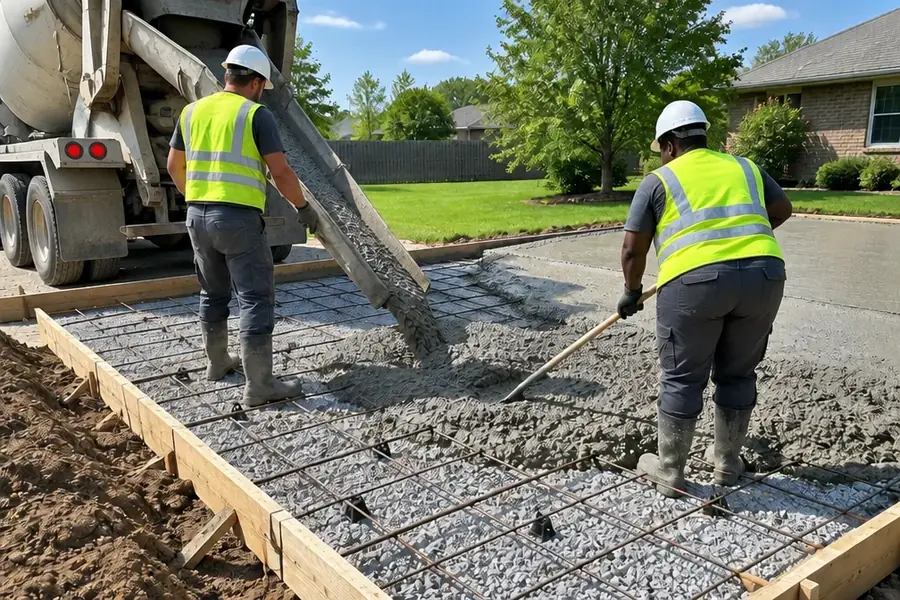
Slabs we pour
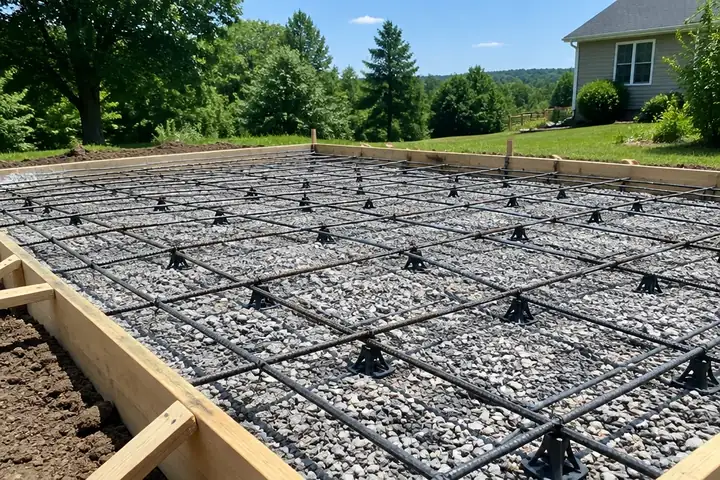
Most of the slabs we pour sit under something: a new garage, a home addition, a workshop, a carport or a small commercial building. Each one needs a different thickness and edge detail, so the first question we ask is what the slab has to carry.
- Garage and carport slabs
- Slabs for home additions and sunrooms
- Workshops and pole building floors
- Mechanical pads and generator pads
- Dumpster and trash enclosure pads
- Thickened-edge slabs for light framing
Why the base matters more than the concrete
Allegheny County clay holds water, swells when wet and shrinks when dry. Pour on that without preparation, and the ground moves under the slab every season. So we strip the topsoil and any soft fill, compact what is left and bring the base up in lifts of crushed stone. A plate compactor run over every lift is cheap compared with replacing a settled floor.
On hillside lots, part of a slab often sits on cut ground and part on fill. Those two areas settle at different rates, which is how a slab ends up with one long crack down the middle. We check for fill before pricing, and we may thicken or reinforce that section. On some sites, deeper footers are the right answer. If your property sits over old mine workings, tell us, since that can affect how the slab is built.
Getting thickness and strength right
Four inches on compacted stone is enough for a walk-in shed or a light workshop. Parking cars calls for 4 to 5 inches with steel. Heavy trucks, lifts or equipment need 6 inches or more. We use an air-entrained mix for anything outdoors, because tiny air bubbles give water room to expand when it freezes. Our concrete specs guide goes through thickness, PSI, rebar and gravel in detail.
| Slab use | Typical thickness | Typical mix |
|---|---|---|
| Shed or light storage | 4 in | 3,500 to 4,000 PSI |
| Garage, cars and light trucks | 4 to 5 in | 4,000 PSI |
| Workshop with heavy tools | 5 to 6 in | 4,000 PSI |
| RV, loaded trucks, car lift | 6 in and up | 4,000 to 4,500 PSI |
Vapor barrier, insulation and drains
Any slab inside a heated space should sit on a vapor barrier, especially if it will ever have flooring on it. Moisture coming up through bare concrete can ruin flooring and glue. Rigid foam insulation is worth adding under a heated workshop or an addition. If you want a floor drain or plumbing lines in the slab, they need to be set and inspected before the pour, so bring that up early.
What a concrete slab costs
Most slabs in the Pittsburgh area run $7 to $12 per square foot. Small jobs cost more per foot, because the truck, crew and setup cost about the same whether the slab is big or small. For prices by size and a calculator, see our concrete slab cost guide.
How the work goes
- Site visit
We check soil, grade, fill, truck access and what the slab must carry.
- Dig and base
We excavate, compact the ground and build the stone base in lifts.
- Forms and steel
Forms are set to grade, with rebar or mesh placed on supports.
- Pour and finish
We place, screed, float and finish, then cut control joints.
Common questions
How much does a concrete slab cost per square foot?
Around Pittsburgh, usually $7 to $12 per square foot, including the stone base, reinforcement and a broom or smooth finish.
How thick should a concrete slab be for a house?
Usually 4 inches over stone and a vapor barrier, with thicker footings at the edges. Plans set the final numbers.
How thick should a garage concrete slab be?
Usually 4 to 5 inches on compacted stone. Go thicker if you will park a heavy truck or install a car lift.
Do you need gravel under concrete slab?
Around here, yes. A compacted stone base drains water and gives the slab even support on our clay soils.
Do you need a vapor barrier under concrete slab?
Under any heated space or finished floor, yes. For an outdoor pad or unheated shed, it is usually not needed.
Can you pour concrete over dirt?
You can, but we don't recommend it here. Bare clay moves with the seasons, so a stone base gives you a far better slab.
Can you pour a concrete slab on a slope?
Yes, with the right forms, a level stone base and often a retaining edge or thickened footing on the low side.
How much does a concrete slab for a house cost?
A full slab-on-grade house is priced by the plan, since footers, plumbing and insulation are involved. Expect $8 to $14 per square foot or more.
More concrete services
- concrete garage floors
- concrete basement floors
- concrete flatwork
- exposed aggregate concrete
- concrete footers
- shed slabs and hot tub pads
- concrete leveling in Pittsburgh
- concrete resurfacing in Pittsburgh
- concrete sealing
- epoxy garage floors
- concrete removal